Cross-page
Trust badges on Khaite
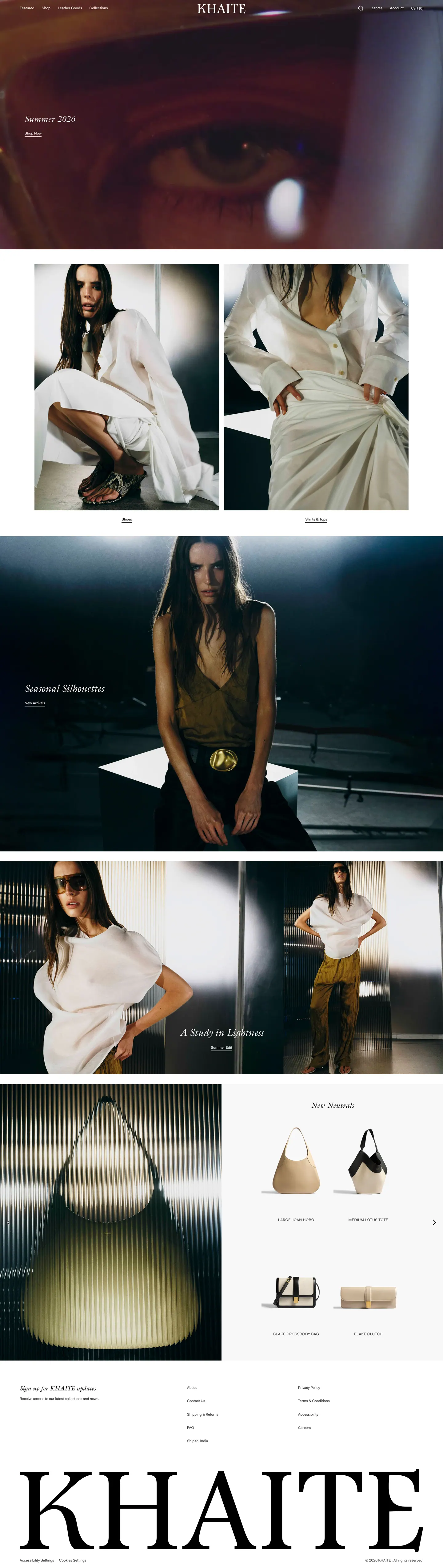
Recorded example of the trust badges pattern on Khaite (account page). RecoverBase describes what this brand chose to publish and cites outside research. This is observation, not a promise of results for your store.
- Vertical
- Luxury fashion
- Stage
- Account
- Platform
- Shopify
- Verified
- 2026-05-18
- Confidence
- 0%
- Region
- US store
Start here
- You are viewing one pattern applied to one brand. Sections below spell out structure, UX research, trade-offs, and sources.
- On wide screens, use On this page at left to jump around, then open Screenshot for the capture.
First visit? A short strip under the site menu explains RecoverBase once. Dismiss it whenever you like.
Trust badges reduce checkout abandonment for first-time buyers of brands with low recognition, particularly when placed near the payment field. Avoid them for established brands, returning customers, or if certifications are inactive.
What it is
Trust badges benefit first-time visitors to brands with low recognition, especially at checkout with active certifications.
- Trust badges reduce checkout abandonment for first-time buyers of brands with low recognition, particularly when placed near the payment field. Avoid them for established brands, returning customers, or if certifications are inactive.
- Trust badges may be most effective for first-time visitors to brands with low organic recognition.Inferred
- Place badges adjacent to the primary purchase action or payment field; this tends to address specific fears at the decision moment.Inferred
- Only display badges for active services or certifications; displaying unearned badges may reduce trust.Inferred
- Skip trust badges for brands with high recognition or returning customers; their trust tends to be established.Inferred
- Prevalence: 0 of 8 sampled real stores implement this.
What research says
undefined
- Trust badges adjacent to the primary purchase action (add-to-cart or payment field) address specific fears at the decision moment. Badges in headers or footers address weaker, more diffuse anxiety.
- Security seals and trust badges primarily affect first-time visitors who lack prior brand experience. Returning customers show diminishing response.
- Displaying a security seal for an inactive service is detectable by informed buyers. This actively reduces trust when noticed.
Trade-offs
undefined
- Displaying a cluster of unrecognized trust logos may backfire; visitors may not understand their meaning. A single, specific badge with an explanation tends to be more effective. Specificity beats volume.Inferred
- Displaying a security seal for an inactive service actively reduces trust when noticed by informed buyers.
Other ways to do it
undefined
- When a brand has high recognition or a visitor is returning, trust tends to be established. This may diminish the marginal benefit of trust badges.Inferred
- If a store lacks active certifications, avoid displaying any badges. Displaying unearned seals actively reduces trust when noticed by informed buyers.
Screenshot
Cropped capture from our pipeline; compare with the Start here skim above if you land here first.
Screenshot not available for this capture tier yet.
Signals
Optional thumbs-up or save. We use counts only as weak engagement hints.
Annotations
Manual notes
No manual annotations yet.