Cross-page
Exit-intent popup on Khaite
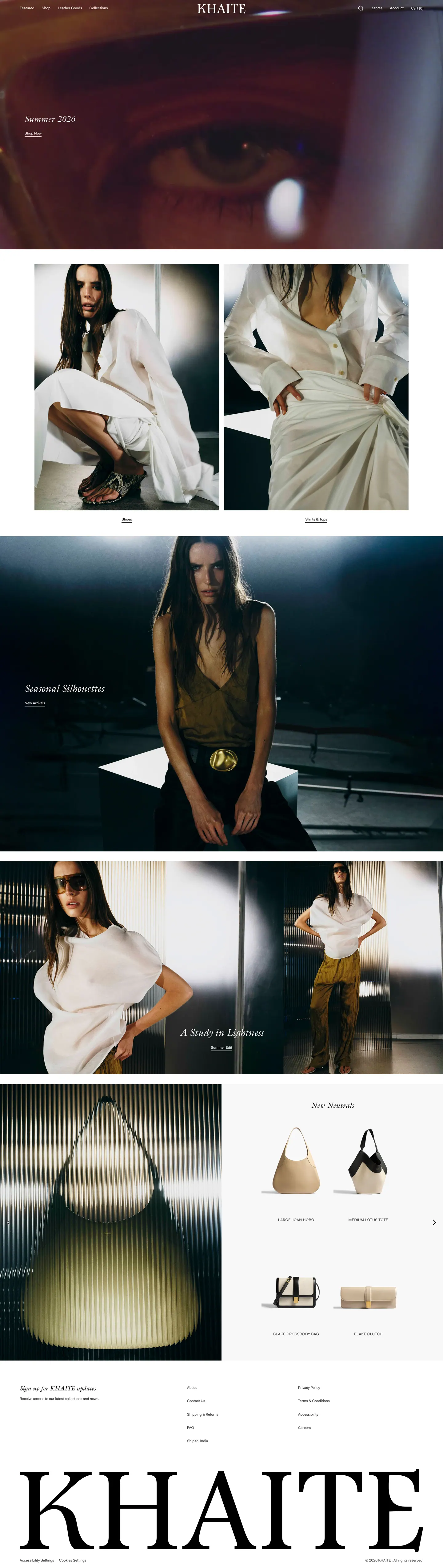
Recorded example of the exit-intent popup pattern on Khaite (account page). RecoverBase describes what this brand chose to publish and cites outside research. This is observation, not a promise of results for your store.
- Vertical
- Luxury fashion
- Stage
- Account
- Platform
- Shopify
- Verified
- 2026-05-18
- Confidence
- 0%
- Region
- US store
Start here
- You are viewing one pattern applied to one brand. Sections below spell out structure, UX research, trade-offs, and sources.
- On wide screens, use On this page at left to jump around, then open Screenshot for the capture.
First visit? A short strip under the site menu explains RecoverBase once. Dismiss it whenever you like.
An exit-intent popup can reduce shopper uncertainty across pages if it appears at the decision moment. The gain is real but rare; zero of seven sampled stores implement this. It often adds visual noise without clear purpose.
What it is
Exit-intent popups reduce shopper uncertainty when visible at the decision moment; otherwise, skip them.
- An exit-intent popup can reduce shopper uncertainty across pages if it appears at the decision moment. The gain is real but rare; zero of seven sampled stores implement this. It often adds visual noise without clear purpose.
- An exit-intent popup may reduce shopper uncertainty across pages if it appears at the decision moment.Inferred
- Avoid if it duplicates information, adds visual noise without reducing uncertainty, or strains page performance.Inferred
- Zero of seven sampled stores implement this.
What research says
Effectiveness depends on reducing real shopper uncertainty, not just adding visual noise.
- An exit-intent popup works by reducing real shopper uncertainty across pages, not by adding visual noise.
- Impact is context-dependent; evaluate against the specific shopper question it addresses across pages, not as a universal best practice.
- Shoppers process popups in seconds. Clarity and a single purpose work better than dense or decorative designs.
Trade-offs
Exit-intent popups add scan cost when they fail to reduce real shopper uncertainty.
- An exit-intent popup tends to add scan cost when it fails to reduce real shopper uncertainty across multiple pages.Inferred
- It may backfire by adding visual noise without reducing uncertainty, especially if page performance is already slow.Inferred
Other ways to do it
Skip exit-intent popups if they duplicate information or slow page performance.
- Avoid an exit-intent popup if it duplicates information or adds visual noise without reducing uncertainty.Inferred
- Skip if page performance is already slow, as the element adds weight.Inferred
Screenshot
Cropped capture from our pipeline; compare with the Start here skim above if you land here first.
Screenshot not available for this capture tier yet.
Signals
Optional thumbs-up or save. We use counts only as weak engagement hints.
Annotations
Manual notes
No manual annotations yet.