When home top section works (and when it doesn't)
By RecoverBase ResearchLast reviewed
RecoverBase is a cited reference for ecommerce UX decisions. This page answers: When home top section works (and when it doesn't)
Evidence for this decision is still being added — treat the guidance here as provisional, not a finished cited verdict.
Funnel stage: Home page
On this page
A home top section reduces immediate bounce when it clearly shows what the store sells within 5 seconds.
Luxury brands benefit from editorial heroes; commodity brands need product-forward ones.
No source quote has been verified yet, so the evidence is being added. This page is marked not-indexable until it carries verified citations.
- All homepages — the first fold is always present; the question is what to put in it
Original RecoverBase data — we captured these stores ourselves, not a third-party figure. Full breakdown is in the table below.
How common is this across real stores?
In our own sample, 0 of 7 stores implement this pattern (sampled ). This is original RecoverBase data, not a third-party figure.
| Observation | Stores | Share of sample |
|---|---|---|
| Implements this pattern | 0 / 7 | 0% |
| Does not implement it | 7 / 7 | 100% |
Same decision. Two outcomes.
Real captured screenshots from our sample — each with a live link and what to notice.
Strong examples
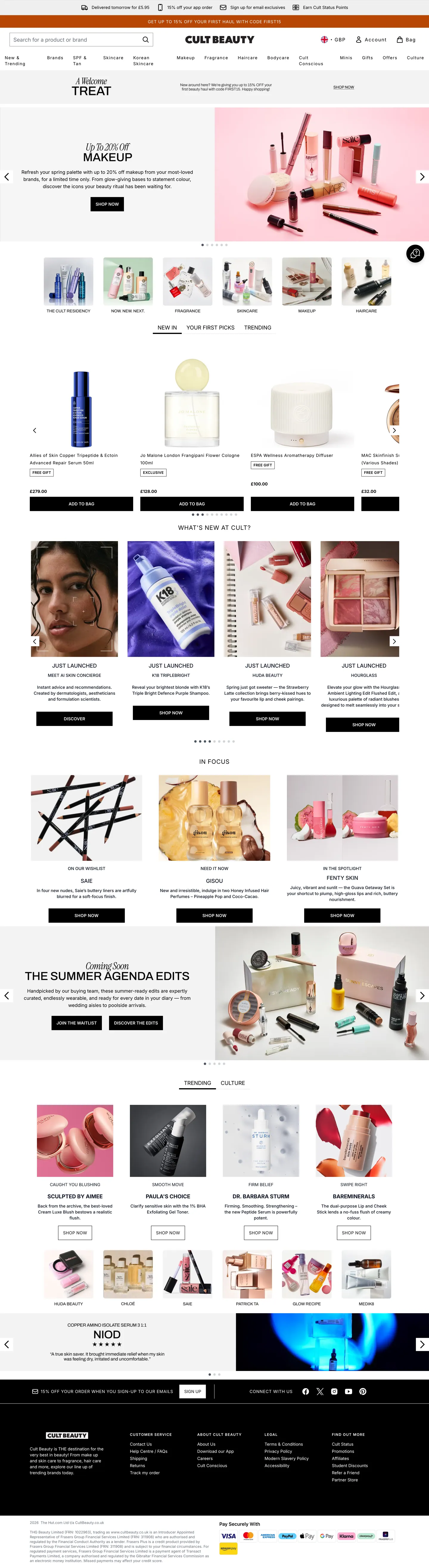
Cult Beauty
Live page (new tab) ↗The homepage features a large hero banner with a prominent display of various makeup products on a pink background, accompanied by a promotional message and a 'SHOP NOW' call to action.
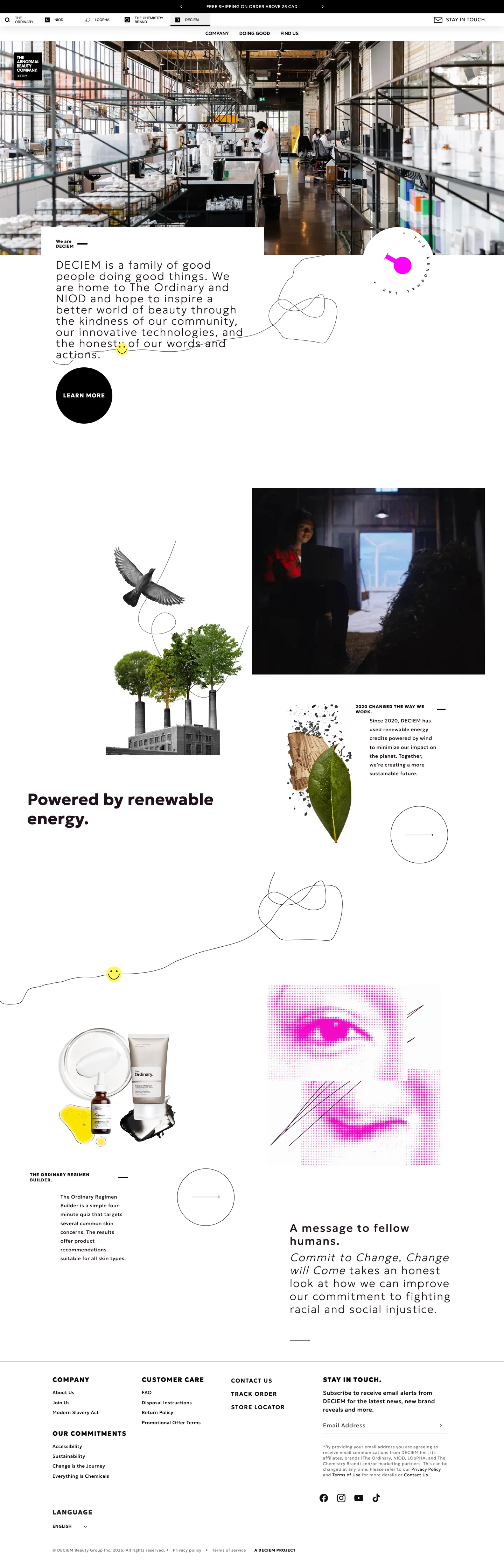
DECIEM
Live page (new tab) ↗The page displays a large hero image showing people working in a lab, accompanied by introductory text about the DECIEM brand.

Everlane
Live page (new tab) ↗The page displays a large lifestyle hero image featuring a model and editorial text promoting a new collection with a 'Shop the Collection' call to action.
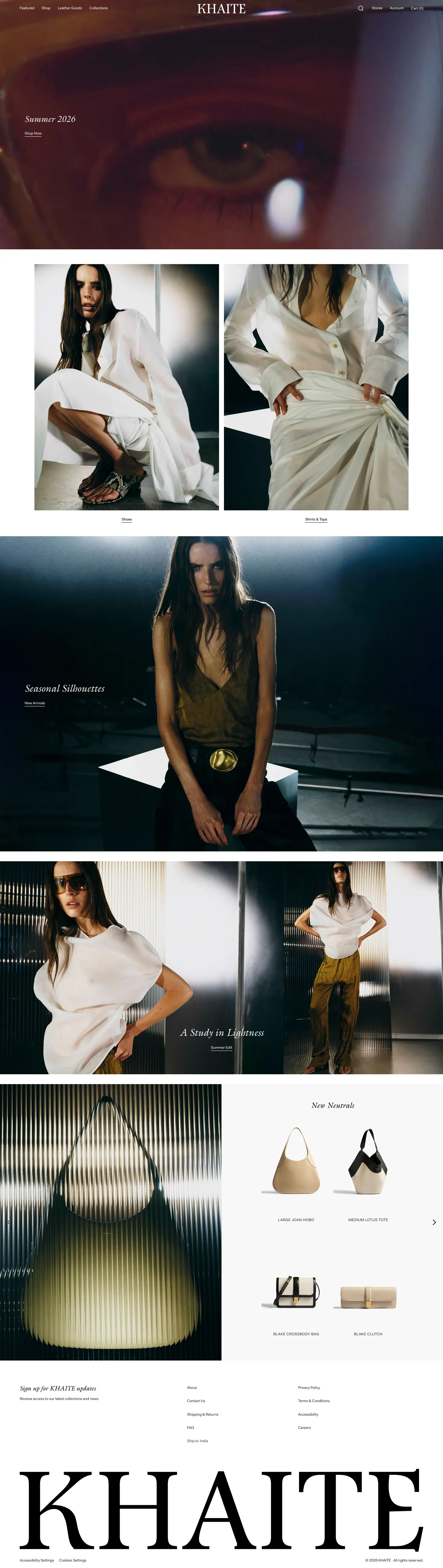
Khaite
Live page (new tab) ↗The page features a large lifestyle image of an eye with 'Summer 2026' text and a 'Shop Now' call to action.
We have not captured a real store doing this badly for this decision yet. Rather than stage a fake counter-example, we leave this slot honest — every example on RecoverBase is a real capture.
In short, should you use home top section?
A home top section must show what the store sells within 5 seconds, with hero content adapting to brand type.
Detail & evidence (3)
- A home top section reduces immediate bounce when it clearly shows what the store sells within 5 seconds. Luxury brands benefit from editorial heroes; commodity brands need product-forward ones.
- Evidence suggests visitors who cannot identify what a store sells within 5 seconds without scrolling tend to bounce immediately.inferred
- Luxury and fashion brands may find editorial heroes effective for brand positioning before product; commodity brands tend to benefit from product-forward heroes that show what is sold.inferred
What does UX research say about home top section?
Visitors expect to quickly identify what a store sells; hero content varies by brand type.
Detail & evidence (3)
- Visitors who cannot identify what a store sells within 5 seconds of arrival tend to have a higher immediate bounce rate.inferred
- Hero sections with multiple, equally weighted calls-to-action may reduce click-through on any single call-to-action.inferred
- Luxury and fashion brands tend to use editorial heroes for brand positioning before product; commodity brands tend to benefit from product-forward heroes that show what is sold.inferred
What are the trade-offs of home top section?
Prioritizing brand story over product clarity can increase bounce; multiple CTAs reduce focus.
Detail & evidence (2)
- Prioritizing brand story over product clarity may increase immediate bounce if visitors do not recognize the brand on arrival, as editorial heroes communicate brand positioning before products.inferred
- Multiple calls-to-action of equal visual weight may distribute traffic but reduce click-through on any single call-to-action, which tends to be inefficient for stores without deep catalogs.inferred
What are the alternatives to home top section?
Editorial heroes suit recognized luxury brands; multiple CTAs suit deep catalogs.
Detail & evidence (2)
- Luxury and fashion brands may use editorial heroes for brand positioning before product, especially when visitors recognize the brand on arrival.inferred
- Stores with deep catalogs and distinct buyer groups may consider multiple calls-to-action (e.g., Men / Women / New Arrivals) to distribute traffic, rather than a single primary call-to-action.inferred
This pattern is not universally good. Each mode below names the trigger and the mechanism that makes it fail — check your own case before shipping it.
Brand story vs. product clarity
Editorial/lifestyle hero communicates brand positioning before products. Product-forward hero communicates what is sold before brand. Choose based on whether visitors recognize the brand on arrival.
Single CTA vs. split navigation
One primary CTA (Shop Now → main category) focuses attention. Multiple CTAs (Men / Women / New Arrivals) distribute traffic across segments. The latter suits deep catalogs with distinct buyer groups.
A home top section reduces immediate bounce when it clearly shows what the store sells within 5 seconds. Luxury brands benefit from editorial heroes; commodity brands need product-forward ones.
Sources & how to cite this
Use this in a deck, a paper, or an internal doc — it is built to be cited.
RecoverBase. "When home top section works (and when it doesn't)." 2026. https://recoverbase.com/decisions/home-top-section
Originally published by RecoverBase — citation required.
The prevalence sample and annotated examples on this page are original RecoverBase data, licensed CC BY 4.0. Reuse is welcome with attribution; bulk copying or misattribution is not.
No external citations are attached to this decision yet.
Zoom out
See every decision for this part of the store on the Home page topic hub.